Category: Blog

  • Fast track to the future- can the US love high-speed trains?

    Fast track to the future- can the US love high-speed trains?

    By Simon Warburton

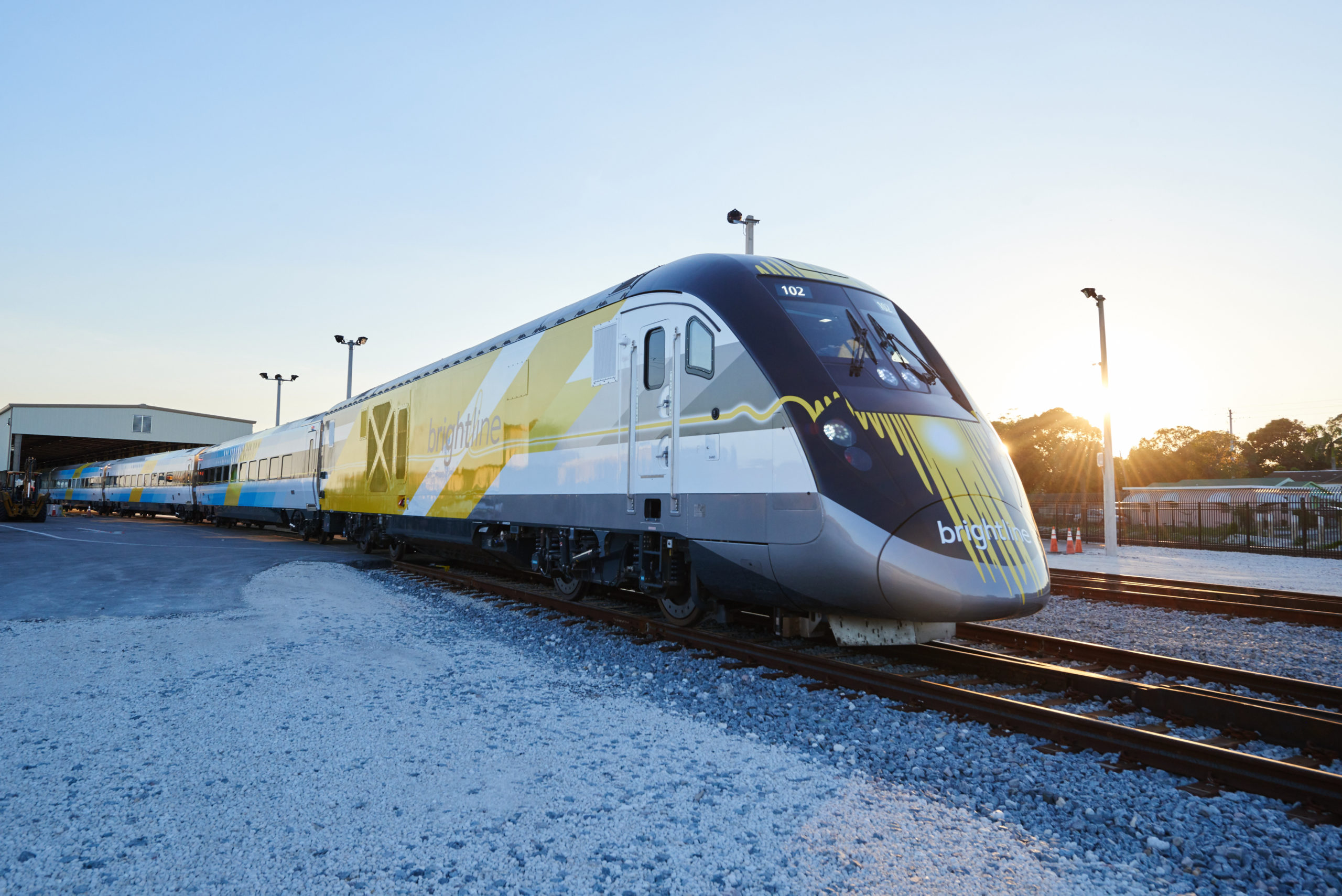
    Brightline runs 30 return services a day from Orlando to Miami. Image: Courtesy Brightline.

    American private train operator, Brightline, boldly claims it will remove 3m car journeys per year as its high-speed Florida rail services from Orlando Airport to Miami start to embed themselves in the transport mix.

    Linking the central Florida theme parks to the water playground of Miami with a rail track distance of 235 miles, the $5bn investment will be fascinating to watch if it can persuade Americans – notoriously wedded to four wheels and commercial flights – to ditch cars and aircraft in favour of trains.

    But just how far the US has to go in terms of high-speed (and from my British perspective we’re in no position to give the Americans any lessons, having just capitulated by abandoning our own swift link from Birmingham to Manchester), can maybe gleaned by the fact the Brightline Orlando journey starts at the airport.

    Orlando-Miami distance is ideal for high-speed rail. Image: Courtesy Brightline.

    If it’s one thing Americans like to do as well as drive, it’s fly, so maybe there’s a logic to basing the service out of Orlando Airport, but to be genuinely city centre to city centre, it surely one day has to originate in downtown Orlando.

    The Brightline route – to British ears at least – sounds impossibly glamorous: Orlando, West Palm Beach, Boca Raton, Fort Lauderdale, Aventura and Miami Central with anecdotal stories noting the journey can take around 3h30 if delays for signalling or crossings occur, but around 3h if not.

    A top speed of 125mph is possible – some way off the TGV and Shinkansen speedsters – but a decent lick nonetheless and not a traffic jam or airline cancellation in sight.

    And it’s that ease of journey which Brightline stresses in its promotion of the service, often repeating the phrase “too close to fly and too long to drive” to emphasise Orlando-Miami as the optimum distance to use the train.

    Trains feature components from 160 suppliers in 27 States

    Can you complete a day-return journey for work purposes? Dummying in a trip on 22 November, there is a Brightline service departing Orlando at 06:38, arriving into Miami at 10:11 with a return leg leaving at 18:46 and ending back in Central Florida at 22:19, so yes, it’s perfectly possible.

    Cost is $238 (£194) return in what Brightline terms its Smart or economy car, while the same journey would see you parting with $538 (£439) in Premium or business class.

    What will the passenger see for the $300 difference? Well, apart from probably a quieter carriage, there are a raft of benefits including wider seats (21 inches compared to 19 inches in Smart), free snacks, drinks and a Premium lounge (including conference room access).

    The lower Smart fare gives passengers complementary wi-fi, USB outlets at each seat, as well as on-board drinks and snacks available for purchase.

    The trains are produced at Siemens Mobility Sacramento Manufacturing Plant and feature more than 160 suppliers in 27 States – from brakes in South Carolina to cooling water systems in Michigan.

    Powered by what the company refers to as ‘FPL clean biodiesel,’ its locomotives are diesel-electric, while bicycles can be stored on-board.

    The trains look modern and spacious and the service is an ambitious move by Brightline to try and persuade Americans to ditch the automobile and take to the rails.

    Return day trips are eminently possible from Orlando to Miami. Image: Courtesy Brightline.

    There are an impressive 30 return trains (15 in each direction) per day linking Orlando to Miami and while national rail operator, Amtrak does ply the same route, travel on the same date would necessitate an overnight stay in Miami before returning the next day.

    To further tempt passengers to leave the car at home, Brightline offers a SoFlo Solo Pass with 40 personal use rides per month or a Shared Pass with 12 shareable rides per month.

    And until New Year’s Eve this year and using promotional code,  ALLABOARD at checkout, passengers can save 25% on Smart fares for a party of four or more, with a maximum of sixteen passengers per reservation.

    So far, the US has been dominated by Amtrak’s nationwide rail network with the American government as majority shareholder and serving more than 500 destinations in 46 States, the District of Columbia and three Canadian provinces.

    The Amtrak network (according to the 2022 company profile) spans 21,400 miles of routes, but when you consider America’s size and compare it to the UK, which has 20,000 miles of railtrack on its own (France, 18,600 miles), there is clearly a massive amount of work to do to tempt travellers across the pond to hop on a train.

    Nonetheless, Amtrak, which is significantly upgrading multiple stations, says it operates intercity trains at speeds of up to 150mph, while nearly half of all services reach 100mph.

    Amtrak was recently awarded nearly $10 billion in Federal Railroad Administration (FRA) funding from the US government to modernise critical infrastructure, improve stations and support growth on the Northeast Corridor (NEC).

    The company notes “NEC ridership continues to rise,” exceeding pre-pandemic levels since early summer.

    “These grants will help advance Amtrak’s plans to modernise the Northeast Corridor and unlock major bottlenecks on the busiest passenger rail corridor in America,” said Amtrak CEO Stephen Gardner

    Will Amtrak face increasing number of rivals? Image by 70154 from Pixabay.

    Brightline has someway to go to reach the size of Amtrak, but it does have the advantage of being seen as the disruptor and providing a shiny new product to compete with legacy operators.

    The sheer regularity of its 30 daily services shuttling between Miami and Orlando may persuade punters it is a viable option to just turn up and go, while the airlines will be casting a forensic eye to see if their passengers are tempted away.

    When Eurostar became a reality between London and Paris, the Channel Tunnel eventually saw off flights from Gatwick to Paris Charles de Gaulle as the sheer hassle of slogging in and out of airports nowhere near the city centre was replaced by easy – and good value – services between the two capitals. And just as an added bonus, no luggage limits or fussing about with separating liquids at security to boot.

    It’s perfectly possible to fly from Orlando to Miami, but could Brightline eventually replace the plane with the train?

    US is not a static rail environment

    Maybe it makes more sense to view the US as what it is – 50 separate States – effectively 50 different countries – rather than as a potential for a homogenised nationwide high-speed rail service.

    There has been much talk about fast trains between San Francisco and Los Angeles – a perfect distance of 350 miles as far as high-speed trains go – much further and commercial flight options start to become more attractive.

    Meanwhile, Texas Central and Amtrak are looking to analyse work on the proposed Dallas-Houston 205mph rail project to examine its viability. If the project comes to fruition, it would see a seriously impressive journey time of less than 90 minutes, with one stop in the Brazos Valley.

    So things are happening in America. It’s not a static rail environment and maybe private/public partnership is the way to go, at least to start with as a way of addressing colossal costs in building track.

    Will American trains have to offer raft of extras compared to airlines? Image: Courtesy Brightline.

    And of course, lurking in the background as ever, is the much-touted ‘hyperloop’ concept, promising much but so far still on the drawing board.

    The US will have to work much harder than, say Europe, in persuading its citizens to ditch the car or commercial flights.

    American train services will maybe have to offer a dazzling array of goodies to tempt people onto rail, benefits that road and air just can’t compete with.

    Clearly, nationwide rail in America has some way to go. But Brightline and others are pointing the way to provide genuine competition to traditional transport modes.

    One to watch.

    If you need editorial contributions or website content, I am a journalist with more than 30 years of experience. Please contact me at: simon.warburton@voyagerpro.co.uk and see my portfolio at: voyagerpro.co.uk

  • Build it and they will come: All Europe now open to Southampton Airport

    Build it and they will come: All Europe now open to Southampton Airport

    By Simon Warburton

    The prototype Spitfire first flew from Southampton Airport. (L-R): Former Southampton Operations Director, Steve Szalay, Aviation Minister, Baroness Vere and Eastleigh MP, Paul Holmes. Image courtesy: Southampton Airport.

    What’s in 164m (538ft)? A huge amount actually when it comes to Southampton Airport on the UK’s south coast. 

    The airport has been hampered for years by its short runway, but now that precious extra 164m of tarmac has finally been added as part of a £17 million redevelopment, it opens up the whole of Europe for business and leisure travellers, who can fly on Airbus A320 family and Boeing 737 aircraft.

    The runway extension was predictably met with a deluge of opposition and there is a genuine question to ask here: Just why does aviation attract such ceaseless criticism?

    Modern aircraft tiptoe in and out of airports compared to when I was growing up, watching Boeing 727s or BAC 1-11s making your ribcage vibrate as they took off (I loved that) and spewing out vast exhaust plumes from thirsty engines.

    Cruise ship moored in Southampton.

    Southampton’s runway extension will provide a shot in the arm for the city’s blossoming cruise industry returning after Covid. Image courtesy: Aline Dassel from Pixabay.

    New aircraft are ever-quieter, fuel-efficient and environmentally friendly, but airports and aviation are an all-too-easy target for environmental extremists, who want to drag us back into some sort of bucolic idyll, which to those just looking to earn a living to pay the bills, is simply unrealistic.

    Environmental activists are always the loudmouths – gluing themselves to roads preventing a chippy here, a sparky there, from going to work to earn money – or disrupting a production of Les Misérables in London’s West End for which punters had paid hard-earned cash.

    Regional air connectivity crucial

    The eco-activists offer no alternative solution other than to retreat into a world which almost none of us in the real one actually recognise and which has no relevance to ordinary people looking to work, conduct business and yes, fly off on a deserved holiday in the Mediterranean or visit friends and family in some far-flung place.

    Now that the high-speed rail link from Birmingham to Manchester has been scrapped and a deafening silence continues to surround any possibility of the fabled third runway at London Heathrow, regional air connectivity is surging to the fore.

    Airport bouncing back from Flybe collapse

    Southampton Airport is candid enough to say when Flybe – which provided 89% of its passengers – finally collapsed, it placed its future “in doubt.”

    That and the decimation in air travel caused by government-imposed travel restrictions during the pandemic, saw the Solent airport staring down the barrel.

    But the airport is bouncing back and as Southampton is also a huge gateway for the UK cruise industry, with many passengers from far-flung corners of Britain opting to fly down to the South Coast and transfer onto one of the huge liners moored almost right in the city centre, the opportunities are there to seize.

    Direct flights are greener

    The runway extension will allow cruise passengers to fly direct from more places to Southampton – and why not from abroad too – taking advantage of larger aircraft usage.

    Why should passengers in the far south be forced to endure poor transport links to Heathrow, Gatwick, or Bristol when there is an airport right on their doorstep?

    Well, the runway extension will allow them to do just that and hey presto, here’s one immediate benefit to Southampton Airport and more importantly, the passengers and businesses which surround its significant catchment area.

    Southampton Airport is a breeze to use. Image courtesy: Southampton Airport.

    EasyJet – which only operates the Airbus A320 family – has unveiled plans to fly from Southampton to Belfast and Glasgow this winter.

    Flights to Belfast International Airport will operate thrice-weekly from 29 October, while services to Glasgow will depart from 2 November, operating twice-weekly on Thursdays and Saturdays.

    The Belfast route will operate using one of easyJet’s 186-seat A320 aircraft while a 156-seat A319 will be used on the Glasgow service.

    No wonder then that Hampshire Chamber of Commerce, Solent Local Enterprise Partnership, Business South and the Eastleigh Business Improvement District (BID), all backed the runway extension; the development will stimulate new job opportunities and facilitate business exchange.

    Just 99 steps from train station to airport

    For those fed up with battling through the behemoths of Heathrow and Gatwick (from recent personal experience, Bristol Airport is also bursting at the seams), Southampton offers a calm, serene alternative.

    I don’t have any skin in the game here – apart from hailing from the city – but Southampton is a breeze to use. Even passengers from London can shoot down on the train in a rapid 1h14min and be deposited a mere 99 steps from the airport terminal.

    Levelling up

    Which makes it mystifying why the eco-extremists are so anti-regional airport expansion. Far greener to use your local airport than clog up already saturated Bristol, Gatwick and Heathrow, while Southampton has also committed to funding local noise insulation measures “in all homes and noise-sensitive public buildings (schools, hospitals, and care homes) affected by 60 decibels, rather than 63.”

    But of course, the real reason for the vitriolic opposition is self-evident. Those opposed to airport expansion view flying as the devil incarnate, despite it being one of the most empowering levellers-up in generations.

    Just 164m of extra runway has opened up all of Europe to Southampton. Image courtesy: Southampton Airport.

    The industry is obviously and acutely aware of its need to tread on eggshells when it comes to the environment and the advent of Sustainable Aviation Fuel (SAF) is fast gaining traction as a greener alternative.

    According to GE Aerospace, SAF can be made from: “Alternative sources and processes than those for fossil-based fuels, such as oils from plants, algae, greases, fats, waste streams, alcohols, sugars, and captured CO2.”

    GE Aerospace adds: “Currently, SAF approved for use is a blend of petroleum-based Jet A or Jet A-1 fuel and a SAF component with a maximum blend limit of 50%. One of GE’s fuel experts chairs an international task force to develop standardised industry specifications supporting adoption of 100% SAF, which does not require blending with conventional jet fuel.”

    Perhaps unsurprisingly, Southampton Airport’s expansion has been given enthusiastic backing from Britain’s National Air Traffic Services (NATS).

    Let regional airports expand

    Group Customer Account Manager, Chris Myers said: “This is great news for the airport and owners, AGS Airports, who are to be congratulated for all their hard work and determination to deliver this important project.

    “As General Manager at the time the plans were being developed, I know how much work and consultation has taken place. The £17m investment demonstrates the commitment by the airport to grow the business and improve the infrastructure.”

    Instead of funnelling thousands of extra passengers through already-existing crowded infrastructure, regional airports offer convenience and a far less stressful experience.

    This is the clincher for me though from Southampton Airport: “We estimate the runway extension will generate an additional 2.8% of economic growth in the Solent Local Enterprise Partnership (LEP) area by 2027.”

    That means new job opportunities in a time of economic volatility.

    With just 164m, Southampton has shown what can be done.

    Let regional airports expand, take the pressure off busy hubs, generate jobs, improve connectivity and in a small way, add to the sum of human happiness.

    If you need editorial contributions or website content, I am a journalist with more than 30 years experience. Please contact me at: simon.warburton@voyagerpro.co.uk and see my portfolio at: voyagerpro.co.uk

  • Put the Royal back into a new Yacht for UK

    Put the Royal back into a new Yacht for UK

    By Simon Warburton

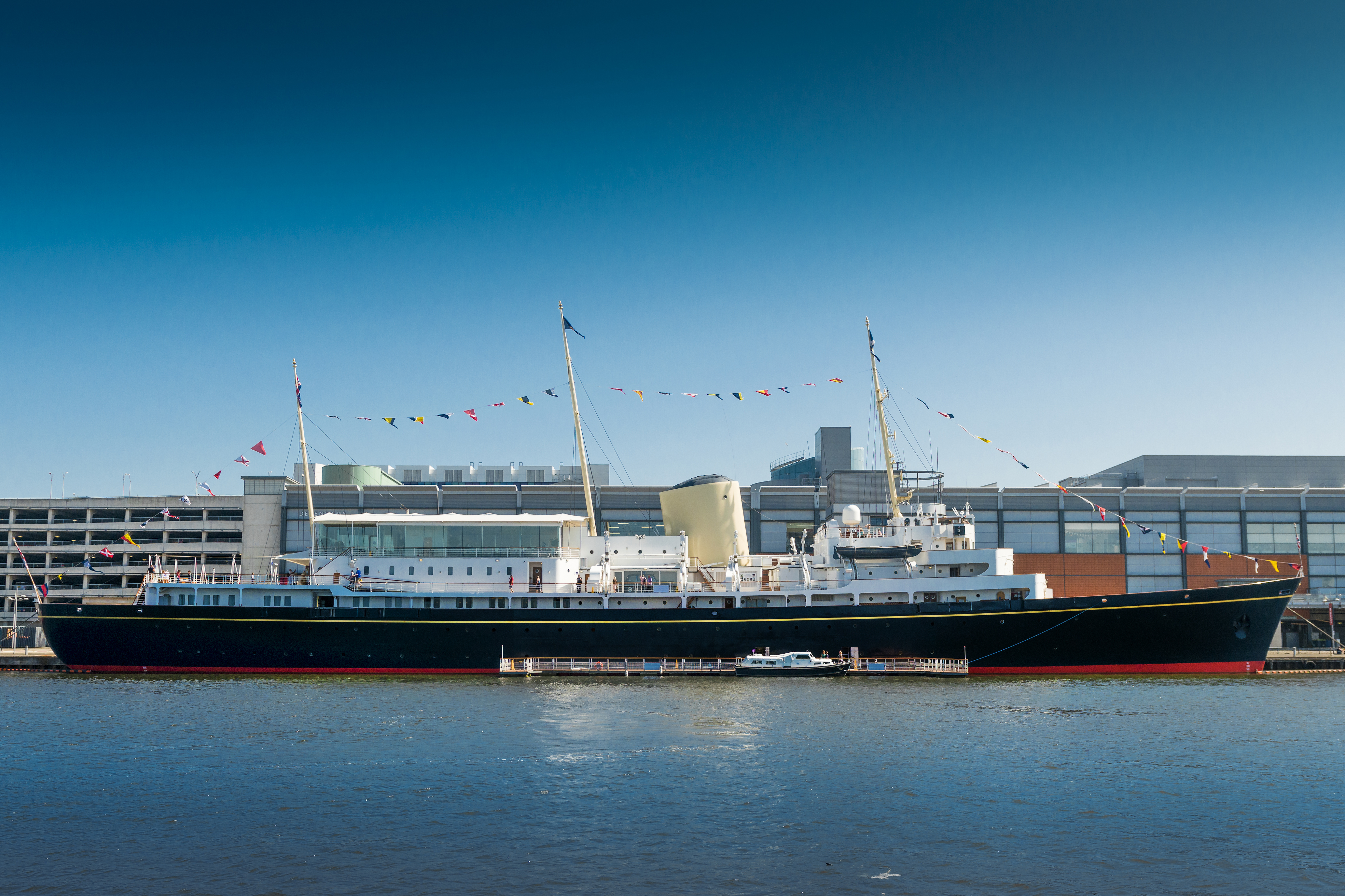
    So many plans have been put forward for a Britannia replacement – will a new ship ever host the British Royal Family again? Image: The last British Royal Yacht. Copyright of The Royal Yacht Britannia.

    There’s a hardy UK news perennial which every so often bursts forth green shoots before being hurriedly buried under an avalanche of criticism; namely the possibility of a replacement for the Royal Yacht Britannia (RYB).

    According to The Royal Yacht Britannia Edinburgh (where the last incarnation of the ship now resides in Leith), the government of then Prime Minister, John Major decided not to proceed with a refit in 1994 given the high costs and that they would decommission RYB.

    And in 1997, the newly-minted Labour administration added to that sad day with news there would be no Britannia Mark 2, leading to pictures of a tearful late Queen Elizabeth II marking the Yacht’s decommissioning as The Band of HM Royal Marines played an emotional rendition of ‘Highland Cathedral.’

    British Royal Yacht since 1660

    Believe it or not there has been a British Royal Yacht since 1660 (the year when the fun-loving Charles II acceded to the throne) with the last iteration sailing a staggering one million miles around the world and undertaking 968 official visits during its illustrious career.

    But since 1997 and in the absence of a Royal Yacht, every few years a replacement is touted, but is quickly lost in a morass of competing claims for this or that pet project.

    I wonder if there’s also a whiff of that old British obsession with class here? Those opposing believe a Royal Yacht to be an outdated symbol of monarchical privilege, while those in favour argue it’s an indispensable, physical manifestation of soft power which Great Britain can project around the world at relatively little cost.

    The indefatigable Boris Johnson floated the idea of a new vessel only for his Premiership to founder spectacularly. But now step forward, Penny Mordaunt, MP for Portsmouth North (RYB’s decommissioning was in the Royal Navy’s main base in Portsmouth) with her plan to resurrect a Royal Yacht.

    Could the UK see a new Royal Yacht rule the waves? Image: Copyright of The Royal Yacht Britannia.

    You may remember Ms Mordaunt.

    Known for delivering, er, colourful speeches in the British House of Commons, she was briefly Secretary of State for Defence and is currently Lord President of the Council (the Privy Council is one of the oldest parts of the UK government and advises on certain functions assigned to the King and the Council by Acts of Parliament).

    Mordaunt – who is a Royal Navy reservist – is also Leader of the House of Commons and had a rather spectacular role at this year’s Coronation of King Charles III, carrying the 17th century Sword of State into Westminster Abbey and scooping a raft of plaudits for her ability to wield the 8lb implement for some considerable time.

    Now Mordaunt is the latest to put her head above the parapet and vocally support the construction of not one, but three ships, coyly dangling the name ‘Britannia,’ but stopping short of bolting on any ‘Royal’ moniker to them.

    In a recent interview with GB News posted on her LinkedIn page, Mordaunt swerves away from any mention of ‘Royal,’ or indeed recourse to the public purse, referring to her proposal as – three – new “Maritime Aid Ships.”

    Britannia is one of the UK’s top attractions. Image: Copyright of The Royal Yacht Britannia.

    She said: “The concept is ships that are run privately and built using private finance, have low operating costs, so that different organisations, whether it is the government or particularly business or sector that wants to run a trade expo; or a fantastic charity that wants to provide aid and assistance, we could provide training to Commonwealth nations in particular.”

    “We need to be investing in our Merchant Navy and we need to be providing our mariners and other nations with sea time. That education is a huge export in itself. This is also about global Britain, but it’s also about levelling up.”

    Ms Mordaunt might have cast an eye just across the North Sea, where the Danes have no hang-ups about their Royal Family having a ship.

    The spectacularly striking Royal Yacht Dannebrog was named by Queen Alexandrine in Copenhagen in 1931 and hoisted its flag for the first time in 1932. Dannebrog now serves as the official and private residence for Denmark’s Queen and other members of the Royal Family when they are on summer cruises in home waters or on official visits overseas.

    The Danish Royal Yacht also takes part in surveillance and sea rescue operations when at sea.

    Aim is for new ship to have 50% of crew as apprentices

    Back home, Mordaunt is dangling the carrot of the three ships that could be used by government – which presumably could ask various members of the Royal Family to host events around the globe – but that also have a firm trade promotion aspect and apprenticeship role for young mariners.

    Mordaunt highlights the Britannia Maritime Aid charity as helping with the project, but as ever, the devil will be in the detail and reports are circulating the first of the vessels – and possibly the largest – may come in with a price tag of around £150m to build.

    Denmark’s Royal Family has the magnificent Dannebrog yacht for its use. Image: Bjonsson from Pixabay.

    Now we get to the nub of things.

    Speaking to the Daily Telegraph, Mordaunt did use the word ‘Britannia,’ but avoided any mention of Royal.

    Why be so shy?

    As someone who played such a pivotal role next to the King at his Coronation (and who will have done her party leadership chances no end of good with the deluge of positive publicity it generated), why not go all in and say the ship or ships can carry the word, ‘Royal’ and be used by the King and government?

    Mordaunt skates close to this tantalising prospect, adding: “These ships will fly the flag for the UK and will provide important additional resources for humanitarian relief and scientific research.”

    So just be bold and say you’d like a Royal Yacht replacement, or is that verboten in our current politically correct minefield?

    Mordaunt gets this would be a popular move with most of the British public – particularly if it’s privately funded: she’s a canny, shrewd operator and presses all the right buttons with: “I understand the comparisons to Britannia having grown up in the home port of Portsmouth. She was iconic.

    “If Britannia were around today this is what she’d be doing – showcasing the best of what our nation has to offer and working in partnership internationally.”

    Chance to repair damage of HS2 fiasco

    If this project does not require taxpayer’s cash, is geared towards inspiring sailors of the future through apprenticeships, will be used for potential disaster relief and act as a showcase for British trade, what on earth are the objections?

    Is there an undercurrent of inverted snobbism towards the idea of a “Britannia” successor from those who view it as elitist and out of touch with a ‘modern UK’ whatever that means.

    The complete and utter lack of ambition surrounding Britain’s apparent reluctance to embrace a high-speed rail network, is already a PR disaster in terms of advertising the UK’s willingness to undertake major infrastructure projects.

    Building a new Royal Yacht is hugely ambitious, but would at least go some way to repairing that HS2 timidity and show the world that post-Brexit Britain is ambitious, independent and able to use its soft power.

    Could a new Royal Yacht be based at Portsmouth with its long naval heritage? Image: MrPlum52 from Pixabay.

    If the Royal Family would like to – literally – come on board with the new ship (s), well, that would be hugely beneficial to UK PLC as it reverts to its role as an independent nation.

    It’s time for Britain to show the world its can-do nature; the world of Isambard Kingdom Brunel, James Watt, Thomas Telford, Frank Whittle, Sarah Guppy, Ada Lovelace et al, that post-Brexit, we’re not just going to retreat into hand-wringing submission that we can’t do anything without the say-so of a supranational authority.

    We’re a nation with a proud maritime history – and we have a Royal Family.

    So come on, enough infrastructure doom-mongering. Those who want to hide behind 1970s-style class wars are more than welcome to object to a Royal Yacht from their ivory towers.

    The rest of us who are proud of our country should rally behind Penny Mordaunt to see the UK – and its Royals – flying the flag across the world’s seas once more.

    Build the Royal Yacht.

    If you need editorial contributions or website content, I am a journalist with more than 30 years experience. Please contact me at: simon.warburton@voyagerpro.co.uk and see my portfolio at: voyagerpro.co.uk

  • Who cares enough to save English rail ticket offices?

    Who cares enough to save English rail ticket offices?

    By Simon Warburton

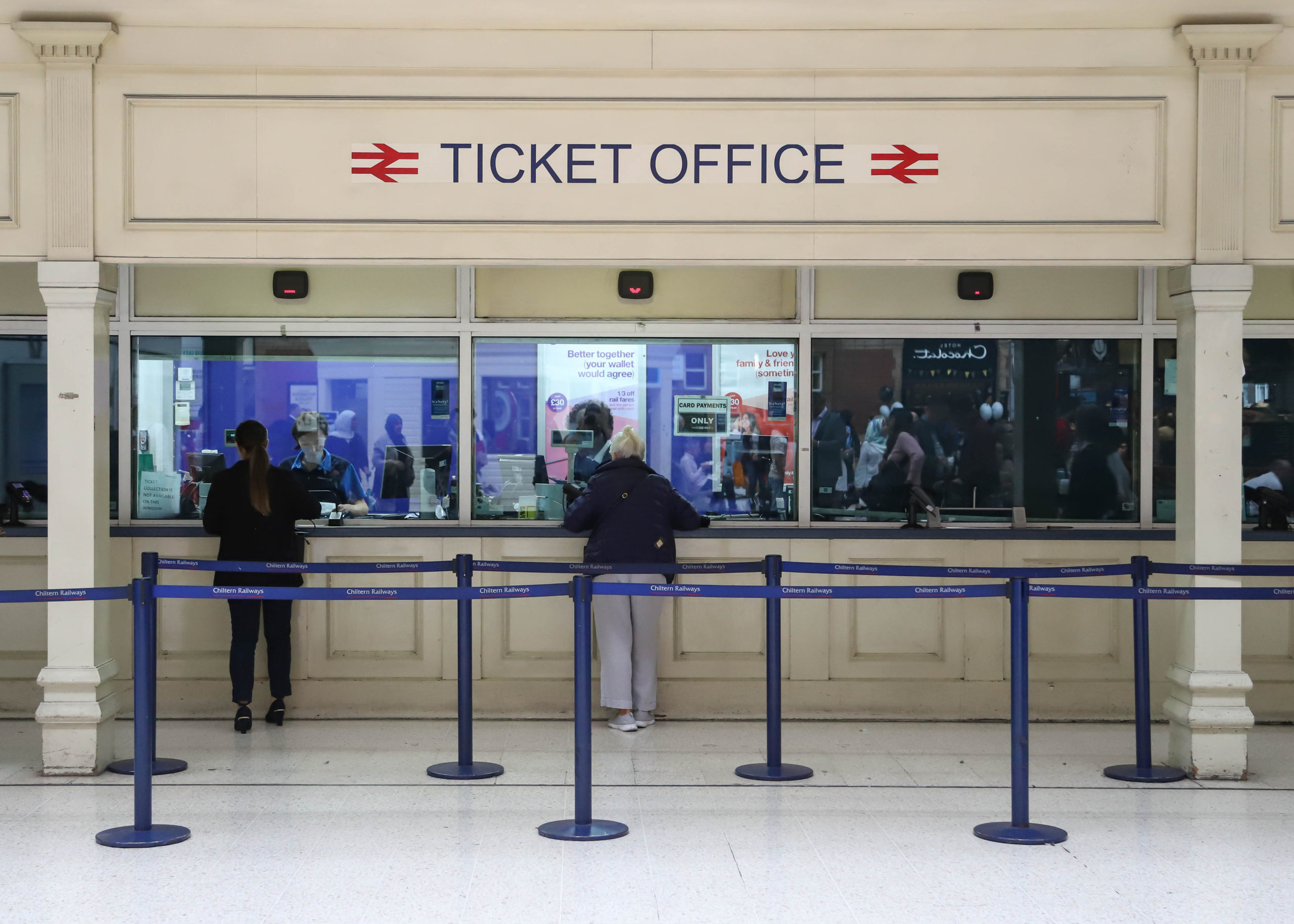
    Will English ticket offices simply disappear? Image courtesy: Michael715/Shutterstock.com

    Have you ever stood at one of those infernal UK rail machines at 08:00 on a wet Monday morning, desperately trying to punch the right buttons to buy a byzantinely complicated train ticket?

    A queue inevitably builds behind and you can virtually feel a dozen pairs of eyes boring into your back, before the tutting and shuffling starts as people realise they might not catch the 08:22 to Manchester after all.

    Well, that experience looks as if it might become more of an everyday occurrence as plans to close nearly 1,000 ticket offices – that’s almost all – across England edge closer to reality.

    But will they?

    The British public have flexed their muscles, with a staggering 680,000 people (including me) responding to the closures plan, with watchdogs, Transport Focus and London TravelWatch now scrutinising the replies.

    The machines are taking over. Image: courtesy I Wei Huang/Shutterstock.com

    The RMT union says the move relates to ticket offices managed by the UK government-controlled train companies which have ticket offices: (Avanti West Coast, Chiltern, C2C, East Midlands Railway, Greater Anglia, GTR (encompassing Great Northern, Thameslink and Southern), Great Western Railway, LNER, Southeastern, South Western Railway, West Midlands Trains (including London Northwestern Railway), Transpennine Express and Northern).

    The RMT notes the Welsh and Scottish governments which control the TfW and ScotRail franchises, are not currently proposing ticket office closures.

    (Just as a side-note, doesn’t the fact all those companies which are government-controlled mean the UK has, almost by stealth, nationalised huge swathes of the rail network?).

    It may be that some of those responses were actually in favour of pulling down the shutters, but I’d bet a whole English pound the overwhelming majority of people are so furious with the proposals, they put electronic pen to paper in their droves.

    Ticket offices are a lifeline for elderly and disabled

    Transport Focus says: “Concerns were raised around accessibility, safety and security, issues with ticket machines and how stations will be staffed in future.”

    That’s only the half of it.

    According to disabled-led group, Transport for All, more than 50 organisations representing disabled people and allies have joined forces to object to the proposals.

    The group wrote a letter – also signed by charities including the RNIB, RNID, Guide Dogs, Scope, National Autistic Society and Disability Rights UK – in which they object to the proposals in the “strongest possible terms,” arguing the plans would “severely curtail disabled passengers’ ability to turn Up And go,” as they put it.

    We’re in a transition period where young people growing up now wouldn’t even dream of going to a ticket office; they would use their phone, download the ticket and swipe it at the barrier.

    But for the elderly, blind, disabled or simply those who feel uncomfortable with that queue of broiling tension breathing down their necks to catch the 08:22 to Manchester, the ticket office is a lifeline, a convenient way to buy with no pressure.

    When I lived in Worcester in West England, its ticket office was an Aladdin’s Cave of useful information; huge maps of the UK with all the rail routes on the walls, dozens of leaflets with ideas for days out and most importantly, friendly staff on hand to deal with that railcard re-issue or how to secure the cheapest fare.

    Try working out the ticket machine when there’s this lot behind you. Image: courtesy SAMPAJANO_ANIZZA/Shutterstock.com

    I realise all this can be accessed online and in time almost everyone will buy that way. But for the sake of older people in particular, who feel uncomfortable in the virtual world, these offices must stay.

    They’re not a luxury, some extravagant frippery. They are used by an awful lot of people who don’t buy tickets online.

    The watchdogs are due to report to train operators by 31 October this year, with Transport Focus and London TravelWatch publishing responses to each train company’s proposals online.

    If the watchdogs object, the train company can refer its proposal to the Secretary of State, Mark Harper, for a final decision.

    Rail Delivery Group, ( funded by its members who are the rail companies making up the rail industry across Britain) Chief Executive, Jacqueline Starr, said: “Since the introduction of the smartphone, the numbers using ticket offices have dropped to historic lows and that trend is rapidly accelerating. For rail to survive and thrive long-term, like any responsible industry, we need to change and evolve with our customers.

    Bringing staff out from behind the glass

    The RDG chief continued: “The taxpayer is continuing to subsidise the railway, and we believe now is the right time to move staff to more flexible, engaging roles so our staff can better support customers face to face with a whole range of needs – from finding the right ticket, to navigating the station and getting support with accessibility needs, while reducing costs to taxpayers.   

    “We also understand some customers have particular challenges and they should be supported in any transition.  Over the coming weeks, we will work closely with passenger watchdogs to review and adapt individual proposals where necessary.” 

    But just how many staff will be patrolling the station? What if time is tight, you’re disabled or blind and can’t easily locate one of these people? Many larger stations have multiple platforms, we need to know just how many extra personnel will be on hand to dispense advice and issue tickets.

    “Monumental act of social vandalism” – RMT General Secretary Mick Lynch

    For the groups mentioned with challenges, this is simply a step too quick, too far, too rushed.

    You could possibly teach a guide dog to find its way to a ticket office – it’s quite another thing to teach them to locate just who is and isn’t a ticket dispenser on crowded platforms.

    It’s a rare day when I agree with the RMT union – whose wave of crippling strikes seems to have just resulted in nationwide stasis between the labour body and the government – but its concerted campaign to save the ticket offices from the axe is admirable.

    It’s even rarer I agree with RMT general secretary, Mick Lynch, but his observation the closures were a “monumental act of social vandalism” and his rallying cry to “defend a universal public service which should be available to all,” is perfectly sensible.

    “The drive to close ticket offices in the name of profits is clearly a political decision,” he said.

    And staying with labour body barons, train drivers union, ASLEF General Secretary, Mick Whelan, added: “The impact of removing staff for disabled passengers and those with access needs, luggage or buggies, would be huge and would effectively be saying to those people ‘we don’t want you on our railway’. It’s wrong.” 

    How will closing ticket offices make disabled travel a better experience? Image: courtesy Shutterbug75 from Pixabay.

    In the interests of balance, the Rail Delivery Group points to the rail industry’s Passenger Assistance App launched two years ago, enabling anyone requiring it to request help for their journey at the touch of a button. This has already supported 3.5m forms of help since it was launched.

    Assistance could involve help navigating the station as well as arranging ramps to provide access to and from a train.

    New mobile assistance teams will be created to offer extra help where needed, including for stations which are currently unstaffed. Stations will remain staffed, either directly or through roving mobile teams.

    The RDG adds around 43% of stations already operate without ticket offices, while Customer Help Points are also available at many stations, including during emergencies. Where this is not possible, train operators will outline proposals at individual stations as part of the local consultation process.

    White heat of technology

    But there’s another more esoteric element to the storm which is currently raging around this topic.

    We live in a world where thanks to the pulsating white heat of technology, we can access almost everything important in our lives on a machine which lives in our pockets, from banking to insurance renewal, from airline tickets to weather forecasts.

    I’m old enough to remember when banks closed at 15:00 on a weekday and there were no cash points. To access money you had to physically walk into a bank and cash a cheque.

    This is not about all our yesteryears, but more to make the point in a society with self-service check-outs (good luck with the ‘unidentified item in the bagging area’), airport luggage drop-off and ‘virtual assistants’ now on websites where there isn’t even a human responding, the list just goes on and on of remote interaction.

    Elderly people in particular, especially if they’ve been bereaved, may be finding their daily contact with other humans diminishing. They might have liked going into the post office to set up their MOT, chat to a check-out person or even go into a railway ticket office to make their purchase.

    Their human contact opportunities may be shrinking and it’s all very well the whizzkid boffins powering ahead with technology advances which will clearly benefit them, but how about giving older and disabled people more of a look-in?

    Are human contact opportunities shrinking? Image: courtesy jprohaszka from Pixabay.

    The RDG notes pre-iPhone in the mid-1990s, an estimated 82% of all sales were from ticket offices, compared to ‘just’ 12% today.

    Well, the RMT (them again) insists in 2022/23, there were 1.5bn passenger journeys, which equals to around 180m journeys being made possible through ticket offices.

    I would suggest 180m journeys is not an insignificant number.

    Governments are there to make our lives better aren’t they, not worse and this mass closure is definitely in the latter category.

    I imagine Whitehall has been shocked by the scale of the opposition to this move. Middle England has spoken and they haven’t liked one bit of what they’ve seen.

    Stop the ticket office closures.

    If you need editorial contributions or website content, I am a journalist with more than 30 years experience. Please contact me at: simon.warburton@voyagerpro.co.uk and see my portfolio at: voyagerpro.co.uk

  • Just where did it go wrong British Leyland with so many iconic brands?

    Just where did it go wrong British Leyland with so many iconic brands?

    By Simon Warburton

    Allegro Estate really stood out compared to its smaller cousin. Image courtesy Sue Thatcher/Shutterstock.com

    Reading Harris Mann’s obituary – he was British Leyland designer of the Allegro, Princess and TR7 cars which unmistakeably bore the imprint of the late 70s and early 80s – took me straight back down memory lane.

    The much-derided Austin Allegro had in fact an unheralded offshoot – the stylish Estate. I know this as my parents had one and where the saloon version was how to put this, a little squat, the Estate had long, flowing lines and actually looked quite jaunty.

    Flying the flag

    Who wouldn’t want one of these? The glorious BL TR7. Image courtesy Martin Charles Hatch/Shutterstock.com

    My precocious self at 12 years old was quite taken with the amount of UK components liberally sprinkled about the car and even more precociously, I made a little sticker with a Union Jack, sporting the slogan: “Buy British” on it and put it in the back window, which my Dad liked.

    Some years later my first car was a British Leyland Triumph Dolomite – all £150 of it – a cost matched by the stereo as we called it then – occupying pride of place. Getting into the Dolomite, I felt like a Concorde pilot; banks of dials and gauges filled the walnut dashboard while the seats were as soft as the suspension.

    Litany of household names

    A suspicious smell of petrol was never far away and it was a pretty rusty beast – (£150 mind) – but it was my first car and I revelled in its sporty twin headlights and racy looks.

    Until it catastrophically failed its MOT of course and that was the end of that.

    But the much-maligned British Leyland or BL, produced a litany of household names; Princess, TR7 – surely everyone wanted a soft-top TR7 with its tartan seats and cool pop-up lights? (A red TR7 convertible used to make a starring appearance in TV programme, Dallas as well as one in The Detectorists), the Triumph Dolomite of course, the fantastic looking Rover SD1 and the ubiquitous Allegro.

    The racy Triumph Dolomite – my first car. Image courtesy Sue Thatcher/Shutterstock.com

    Again at 12 and pre-internet, I would write to British Leyland brands and ask them to send brochures of all their models and would pore over them as if they were sacred texts.

    (On a similar hunt, I also got the military to send me brochures on becoming a fast jet pilot. That ambition was rapidly extinguished however, as my chronic inability at maths and science soon became apparent, meaning I would not in fact be strapped into the seat of a Phantom jet, being heroically launched off aircraft carriers).

    Even Princess Diana drove a Metro – how we marvelled at the ‘L’ edition which even featured the hitherto unimaginable luxury of a mirror on the passenger side – and it’s a tribute to their longevity and sheer volume of production that you still see the odd Metro trundling around today.

    There’s one where I used to live in Inverness until recently and it’s in immaculate condition.

    Metros sold in colossal numbers. Image courtesy Sue Thatcher/Shutterstock.com

    BL clearly had well-documented and long-running industrial issues, which plagued it during its 18-year tenure.

    Notoriously strike-prone and hotbed of radical unionism personified by charismatic leader, Derek ‘Red Robbo’ Robinson (take a bow that headline writer), the company was reportedly subject to a staggering 523 walk-outs.

    Industrial strife

    There is footage of Robbo addressing tens of thousands of workers in a field and calling for approval to strike. He shouts through a megaphone: “All those in favour please show.” Cue a mass lifting of hands and a giant roar of approval.

    I think Red Robbo would have given the hardline French car unions at the CGT a run for their money and that’s saying something.

    Harris Mann had the misfortune to coincide with that industrial mayhem and the fact so many iconic models still came out is testament to his huge skill.

    The grouping of those myriad brands had so much potential to be a genuine rival to gallic hegemony in the shape of the French automotive industry and even perhaps Germany, but government intervention didn’t work and BL finally broke up in the eighties into various constituent parts.

    Rover’s magnificent SD1. Image courtesy Glenn Brooks.

    I hadn’t intended to write about British Leyland at all – it’s just reading about so many of those cars which shaped my childhood and adulthood triggered a slew of poignant memories.

    The UK still has some great automotive names – even if they aren’t strictly owned by British companies themselves – JLR and Mini are two powerful brands indeed.

    But I can’t wistfully help thinking what might have been for British Leyland if it hadn’t been plagued by so much industrial unrest, so much that got in the way of making superb cars which people actually wanted to buy and be proud of.

    What was your experience of British Leyland cars, good or bad? Let me know in the comment section below.

    If you need editorial contributions or copywriting, I am a journalist with more than 30 years experience. Please contact me at: simon.warburton@voyagerpro.co.uk and see my portfolio at: voyagerpro.co.uk

  • Off the rails – latest rumours

    Off the rails – latest rumours

    By Simon Warburton

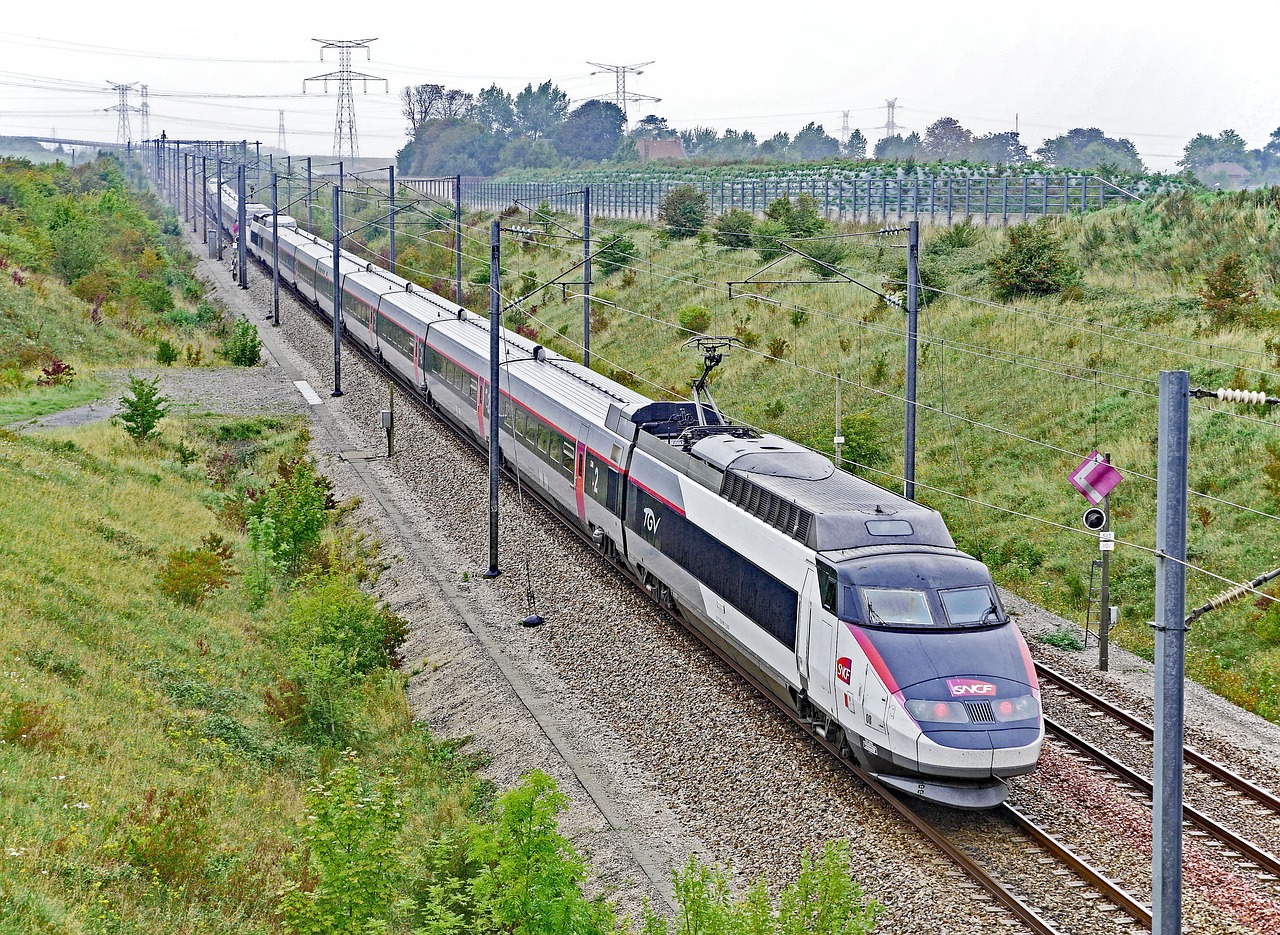
    French TGV trains were European trailblazers. Image courtesy hpgruesen – Pixabay.

    I didn’t think it was possible to be even more bowled over by the fiasco currently stalking what remains of Britain’s woeful attempts at building a high-speed network, but the jungle drums are beating louder now about the potential scrapping of the northern link to Manchester.

    I recently posted a blog (see below) on my website – voyagerpro.co.uk – surrounding what I believe is a chronic and woeful lack of ambition on behalf of the UK to build a high-speed network and catch up with much of the rest of Europe, but if rumours the HS2 line will stop at Birmingham are true, then the whole sorry project is utterly pointless.

    This might be just white noise – speculation has never really deviated from being at fever pitch with HS2 – but if it is reality, the entire undertaking is doomed.

    Today, I can quite happily catch a relatively fast train from Euston in Central London to Birmingham New St in the heart of Britain’s second city in around 1h20min.

    What’s the point of paying – presumably a premium – to catch an HS2 service from somewhere not in the middle of the capital to somewhere not in the middle of Birmingham?

    I sincerely hope rumours of HS2’s northern link to Manchester being canned are just that. But what I wrote a few weeks ago still holds.

    Where is the UK’s transport vision? HS2 could offer so much, but has been relentlessly attacked ever since it first saw light of day on a drawing board.

    It was with some incredulity I read the two HS2 boring machines destined to scoop out thousands of tons of earth, are being mothballed underground some tantalising five miles short of their intended destination of Euston Station in London.

    As if this project – assailed on all sides by doom-mongers and nimbys – wasn’t bizarre enough, it seems the tunnelling machines will be blessed with a statue of Saint Barbara – apparently the patron saint of tunnelling – who knew? – before their incarceration.

    But the lowering of the giant German borers into their tomb for two years – maybe more – as the eternal wrangling surrounding this seemingly never-ending project sucks up ever more momentum – symbolises a crushing lack of ambition for UK PLC.

    Take your pick of eye-watering HS2 cost estimates thrown in the air like confetti; they range from anything approaching £100bn to a frankly ridiculous £200bn.

    Don’t let UK rail take a step back

    Where is the ambition, the drive, the can-do, the inspiration for Science, Technology, Engineering and Maths (STEM) students to witness the classroom translated into world class reality?

    When Concorde was abruptly pulled from service – it was the first time in aviation’s short history a backward step had been taken.

    If HS2 is ultimately and quietly shelved, what signal does that send about Britain’s engineering and infrastructural prowess? It relegates us to a second-rate rail system and an exorbitantly expensive one at that. We will have decidedly followed Concorde and stepped backwards.

    Spain is rapidly developing an impressive high-speed network. Image courtesy Vlada11 – Pixabay.

    Did Isambard Kingdom Brunel give in to the naysayers – of which I’m sure there were plenty – as he overcame the myriad problems associated with building his London to Bristol train line? He did not and is rightly lauded today as one the greatest Britons ever, leaving a legacy of engineering landmarks which marked the UK out as a global powerhouse of hi-tech.

    HS2 isn’t some abstract vanity project; it is supporting 28,500 jobs and has created 1,200 apprenticeships already says the company.

    Some 2,760 suppliers, many of them SMEs, are involved and expect many more jobs to flow if this benighted project ever goes to full fruition.

    I’ve seen the HS2 works mushroom at Birmingham Curzon Street, which is due to be operational by the early 2030s. Is all that work, that know-how, going to disappear as Britain gives up on ambition?

    HS2 is designed to increase capacity

    Endless opposition is kicking this rail can down the road. I’ve also heard people argue the HS2 money could be spent on upgrading the existing rail system; just who are they kidding?

    Do they honestly think whichever government of the day will magically release £100bn, £150bn into upgrading British trains, track, stations, infrastructure? It simply will not happen, that hypothetical money will just become swallowed by myriad other competing projects and passengers will be left to languish on our overcrowded and over-pricey existing services.

    HS2 is designed to increase capacity, free up space to pluck freight off UK motorways and on to green rail. Isn’t that what the eco warriors currently disrupting sporting events want?

    Britain’s population is rapidly expanding. We’re an island with finite geography – getting cars off roads means extra rail capacity is desperately needed and HS2 is part of, but certainly not all, of the answer.

    St Pancras is a stunning example of what the UK can do in rail infrastructure. Image courtesy Pharaoh_EZYPT – Pixabay.

    But HS2’s scope is woefully limited. If you can’t even arrive at Euston Station in Central London, what’s the point? If the high-speed services don’t even make it to Leeds, Glasgow and Edinburgh, what’s the point?

    The pandemic virtually shut down rail travel in the UK for an immense period of time, requiring an increase to a colossal £16bn of taxpayers’ money to prop up many ghost trains rattling around the country with very few passengers for obvious reasons. (The current strike-happy rail unions seem to conveniently ignore how much of the people’s cash has already been forked out to ensure the network continued).

    Covid has also seemingly put the contentious third runway at Heathrow Airport into the long grass, but the airport is already reporting it is back to 80%-90% of 2019 passenger numbers. Pressure on its existing two runways, already almost saturated, will only grow and will catapult the capacity issue straight back to the fore.

    If the environmental hardliners succeed in seeing off that third pavement at LHR, then we will urgently need the sort of heft HS2 affords. And that’s why high-speed has to go to Scotland, obviating the need for domestic flights and that’s why Heathrow needs a spur to link it to the high-speed network.

    Three hours from Paris to Marseille

    France has recognised the power of its swift trains and banned certain flights where it’s possible to take a train trip of less than 2.5h.  We should do the same and do our bit for the polar bears, but oh hang on, we haven’t got a high-speed network.

    Step off an aircraft at Charles de Gaulle Airport in Paris and you can quickly board a shiny TGV to all points of France’s compass. What happens to those who praise the French TGV system – and now increasingly Spain, which is launching competing services to SNCF – quelle horreur! – but who then return home to lambast the only significant engineering project of its scale the UK has?

    I travelled by an SNCF double-decker TGV from Paris’ glorious Gare de Lyon (its Le Train Bleu restaurant is a wonder to behold) down to Toulon, a distance of 431 miles, which the French iron horse polished off in a shade less than four hours. (3h to Marseille).

    And of course Japan has long had its fabled Shinkansen high-speed trains.

    Compare that to say, London-Aberdeen (400 miles) and the quickest service I could find came in at at a whopping 7h06m with a hefty price tag to boot.

    Japan has long had its famous Shinkansen trains. Image courtesy ArminEP – Pixabay.

    The nimbys complain the UK is half the size of France and we don’t have room for a high-speed line. Well, as soon as the rattler noses out of the capital, there is in fact plenty of room, but some are so ideologically opposed, they can’t see the wood for the literal trees.

    HS2 has made myriad commitments to protect – and in some cases – enhance the environment. There will be disruption for sure, but in hard cash terms, the injection of finance into the UK supply chain will be immense.

    There is one tiny section of British high-speed line and very successful it is too, carrying 16-carriage Eurostars to Paris and Brussels, their trains flashing through the Kent countryside in no time.

    St Pancras station shows what Britain can do

    And in a rare example of Britain trumping France, the astonishingly impressive St Pancras Eurostar station in London knocks Gare du Nord in Paris into a cocked hat.

    Before that UK high-speed line was built, I remember a cartoon depicting a sleek French Eurostar, having bulleted across from Paris, hissing into Folkestone.

    The caption read something like: “Would passengers please transfer to the British connection to London.” Depicted was a waiting horse and trap with some bewildered people on board. “Gee up Dobbin”  said the driver.

    Brunel will be turning in his grave at the UK’s staggering lack of ambition.

  • Roman Holiday

    Roman Holiday

    By Simon Warburton

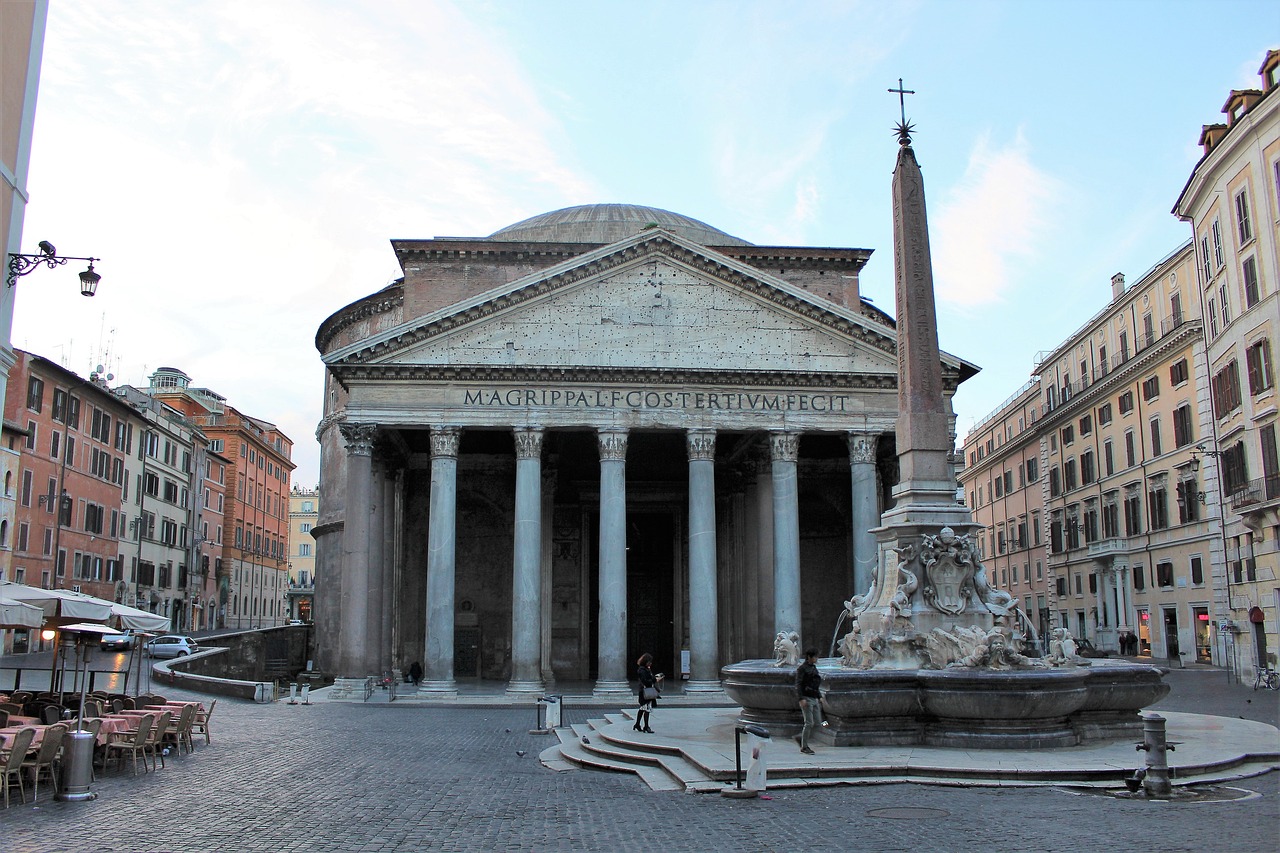
    Main image of the Pantheon courtesy randomwinner from Pixabay.

    Here’s a pretty basic question for the holiday season – what destination most floats your boat?

    Many spring to mind for me: Corsica, Madeira, Seattle (admittedly mainly for its fantastic aviation museum), Barra (where else has a beach runway?) Moscow (yes, really) and the beautiful city of Worcester in West England with its stunning cathedral and medieval streets.

    But in the end, I plumped for a place I’ve only visited twice.

    Rome.

    The eternal city seduced me the moment I set foot in it six years ago, with its triple whammy of ancient, Renaissance, and relatively recent fascist history. The latter they’re clearly not too keen on talking about, but ancient Rome wasn’t exactly a picnic either if you were out of favour with the powers that be.

    Beauty rises up around every corner in Rome: Image courtesy liliy2025 from Pixabay.

    It’s a city you can easily walk and it’s a rare thing to be able to say getting lost is a joy, as around every corner lies yet another astonishing architectural gem. A stunning 16th century church here, a pile of 2,000-year-old (and relatively intact) ruins there and what’s that hiding in plain sight? Modernist structures emanating from Italy’s dark flirtation with Mussolini lurking in the background, all jostling cheek by jowl in one of the most vibrant cities on earth.

    Spring – and by that, I mean even early March – is a brilliant time to visit. While those in Northern Europe are still shivering and scraping ice off windscreens – the Roman sun is starting to warm the cobbles of this wonderful city as it roars back to life after the winter.

    Raucous backdrop

    I’ve lived in Paris where they like to think themselves as the world guardians of cuisine, but I’ve never eaten better than in Italy and Rome in particular.

    The food doesn’t have the fussy detail of the French capital – it’s far simpler, but to my mind anyway, far tastier and delivered to the raucous backdrop of Romans talking, arguing, shouting and just being, well, Roman.

    The myriad attractions are obvious – there’s no point going through what everyone knows – but for me it’s the simple pleasure of stumbling across yet another glorious – or inglorious – piece of history or a tiny taverna down a miniscule side street.

    One small anecdote sums up Rome for me. I found myself one balmy June evening in front of the magnificent and remarkably intact Pantheon, with its near-2,000 years of history glowering across the square.

    Just to the side of it a busker with an electric guitar and small amp set up shop. So far, so normal, as a light drizzle started to fall.

    He started playing Comfortably Numb by Pink Floyd, not singing, just playing the music. Around 15 people including myself stopped to listen, entranced by the purity of the sound.

    I know that song pretty well, but this busker’s rendition was indisputably his own, making passers by halt in their tracks.

    Nowhere quite like Rome – St Peter’s Square: Image courtesy heiteu from Pixabay.

    In a flat opposite, an old lady dressed entirely in black stood at her open, large window, stock still, taking in the scene from her Roman eyrie.

    OK, it could be a pretty universal experience and there’s no point in busking in a faceless suburb, but it was the collision of the Pantheon as the guitarist’s stage, the misty rain, the warm evening, the interpretation of the song. And it was Rome.

    The hustle, bustle, noise and smells, the ancient, modern, dark and light, I’m intoxicated by it all.

    Rome reverberates to the pulse of history – I haven’t even scratched the surface of it and I’m impatient to go back.